Quick Links
 Quick Links
It’s a natural parental instinct to want to keep your child warm and bundled while traveling. However, it is important NOT to put your child’s coat on before buckling them in the carseat. The bulky padding in your child’s coat can compress with the force of a crash, which would allow your child to move within the carseat harness, thus increasing risk for severe injury.
Before, strapping him in with his coat on, try the “coat test,” which can help determine whether your child’s outer layer is safe to wear in the carseat. Put your child in the carseat with his/her coat on and pull the straps snug. Then unbuckle and take his/her coat off. Place your child back in the carseat and check the straps. If the straps are too loose, then your child’s jacket is not safe to wear in the carseat.
So, how do you keep your child warm during the winter season? Here are a few ideas:
- Cover your child up with a blanket after securing him/her in the carseat
- Place your child’s coat on backwards after securing him/her in the carseat
- Use the carseat covers for infant carseats
The cold weather has certainly ushered in the wintertime germs; however, in addition to keeping him healthy, we want to keep him safe!
References
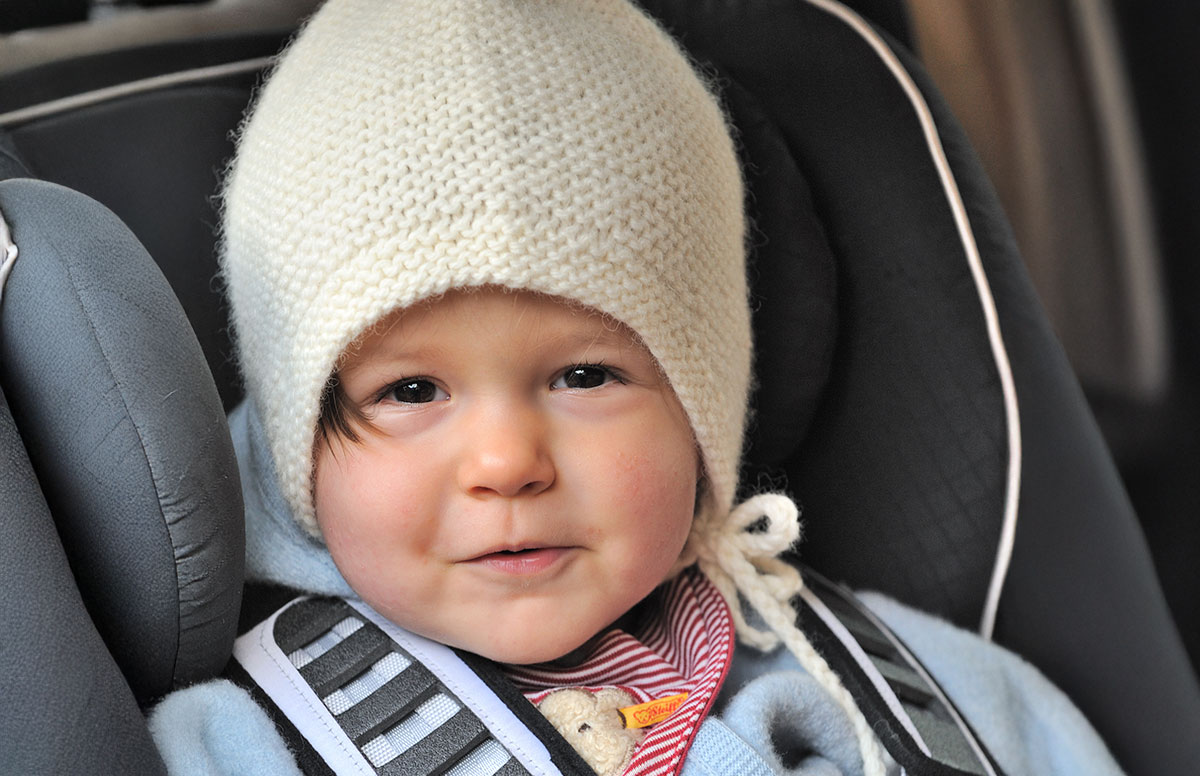
It’s a natural parental instinct to want to keep your child warm and bundled while traveling. However, it is important NOT to put your child’s coat on before buckling them in the carseat. The bulky padding in your child’s coat can compress with the force of a crash, which would allow your child to move within the carseat harness, thus increasing risk for severe injury.
Before, strapping him in with his coat on, try the “coat test,” which can help determine whether your child’s outer layer is safe to wear in the carseat. Put your child in the carseat with his/her coat on and pull the straps snug. Then unbuckle and take his/her coat off. Place your child back in the carseat and check the straps. If the straps are too loose, then your child’s jacket is not safe to wear in the carseat.
So, how do you keep your child warm during the winter season? Here are a few ideas:
- Cover your child up with a blanket after securing him/her in the carseat
- Place your child’s coat on backwards after securing him/her in the carseat
- Use the carseat covers for infant carseats
The cold weather has certainly ushered in the wintertime germs; however, in addition to keeping him healthy, we want to keep him safe!