Quick Links
 Quick Links
I recently picked up the volume on child development published in Childcraft books, copyright 1949. My mother had saved these from her childhood, and I had never realized they included an entire volume about the intricacies of child development. I love reading long-forgotten books about childhood development and may write a few more blog entries on some gems from the past I’ve found useful.
I expected to be rolling my eyes over some dated preoccupations like “the dangers of the radio” (although there is a chapter on this and you can just substitute TV or Ipad every time they mention “radio”). Instead, I was amazed at how current and prescient the questions in this book were. Each chapter is written by a different child development professional, and while the language is slightly more formal than most developmental books of today, and there are occasional comments which bolster established gender norms, the sentiments are the same as any book of today.
And, amazingly, I agreed with almost everything written, reviewed in context.
I’m pretty sure if I copied the Good Beginnings chapter and distributed it to patients, they would think it a recent article about attachment parenting in infancy. (I am not espousing attachment parenting for every family as its understood in today’s social lexicon, but I love how Childcraft has a measured understanding of how and why a baby cries and how a parent should engage with their baby).
Moreover, many of the articles did not get stuck in the morass of looking for medical reasons for child behavior which serves to pathologize the normal and the pathological (ie: catecholamines are increased in children fighting toxic stress), but rather, focused on what can be accomplished from a practical perspective in order to meet the goal: a child who grows up to establish a happy and useful life.
Some favorite quotations:
“The important thing to remember about children all the way from infancy to adolescence is that they thrive best when their parents enjoy them.”
“Penalties for lateness, untidiness, and the like may occasionally help children learn. But, on the whole, parents tend to depend too much on such devices, overlooking the fact that in spite of them a child often sinks deeper and deeper into indifference or antagonism.”—Anna W.M. Wolf in “Good Beginnings”
“Every child wants to feel that he has a place, is growing in self-respect, and is doing something that is worth-while. When his ordinary experiences do not satisfy these demands, he will try other methods to satisfy them.”
“Just making mud pies will not satisfy children. They need to feel that they can make something real, that they contribute something to the family, and that their efforts are appreciated.”
“Prejudices have a hard time thriving where everyone has an opportunity for reasonable security and self-respect and where people have learned to understand and be considerate of each other.”“The little child who is entrusted with small errands or household tasks will begin to develop initiative. At the same time, she will gain a stronger feeling of security and a sense of belonging.”
—Dr. Ralph Ojemann, “Building for a Happy and Useful Life”
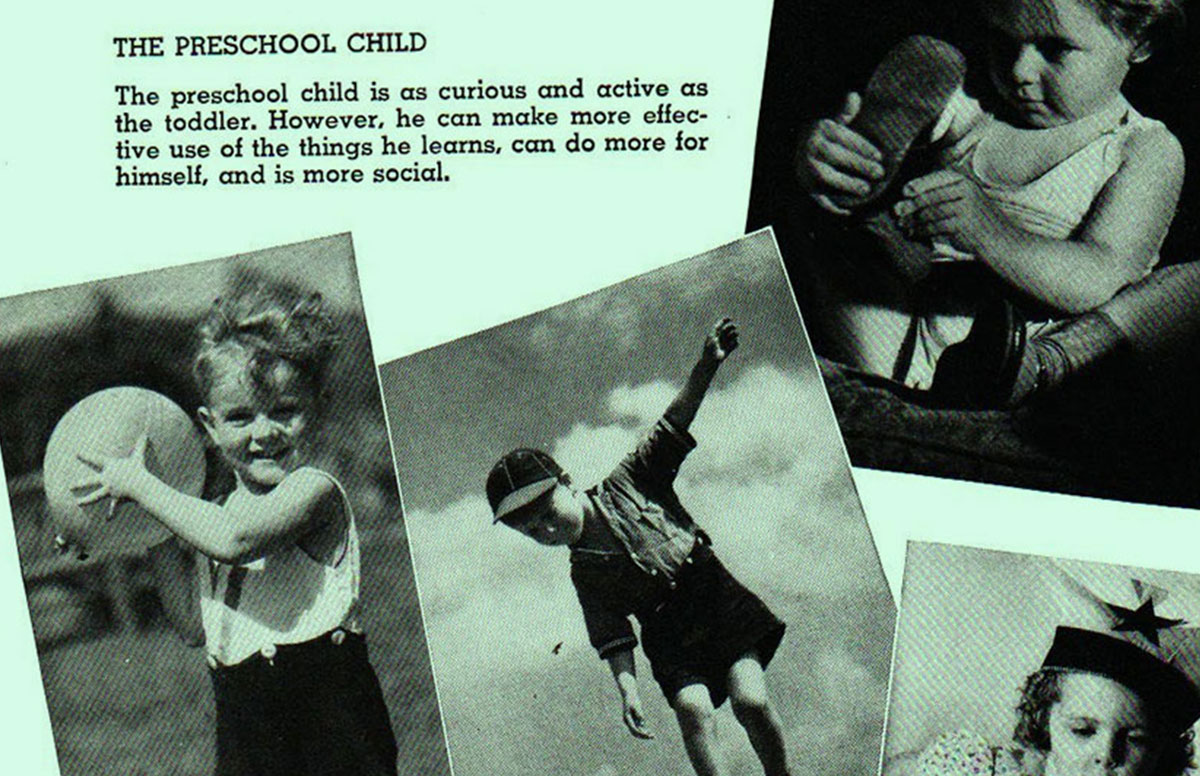
I recently picked up the volume on child development published in Childcraft books, copyright 1949. My mother had saved these from her childhood, and I had never realized they included an entire volume about the intricacies of child development. I love reading long-forgotten books about childhood development and may write a few more blog entries on some gems from the past I’ve found useful.
I expected to be rolling my eyes over some dated preoccupations like “the dangers of the radio” (although there is a chapter on this and you can just substitute TV or Ipad every time they mention “radio”). Instead, I was amazed at how current and prescient the questions in this book were. Each chapter is written by a different child development professional, and while the language is slightly more formal than most developmental books of today, and there are occasional comments which bolster established gender norms, the sentiments are the same as any book of today.
And, amazingly, I agreed with almost everything written, reviewed in context.
I’m pretty sure if I copied the Good Beginnings chapter and distributed it to patients, they would think it a recent article about attachment parenting in infancy. (I am not espousing attachment parenting for every family as its understood in today’s social lexicon, but I love how Childcraft has a measured understanding of how and why a baby cries and how a parent should engage with their baby).
Moreover, many of the articles did not get stuck in the morass of looking for medical reasons for child behavior which serves to pathologize the normal and the pathological (ie: catecholamines are increased in children fighting toxic stress), but rather, focused on what can be accomplished from a practical perspective in order to meet the goal: a child who grows up to establish a happy and useful life.
Some favorite quotations:
“The important thing to remember about children all the way from infancy to adolescence is that they thrive best when their parents enjoy them.”
“Penalties for lateness, untidiness, and the like may occasionally help children learn. But, on the whole, parents tend to depend too much on such devices, overlooking the fact that in spite of them a child often sinks deeper and deeper into indifference or antagonism.”—Anna W.M. Wolf in “Good Beginnings”
“Every child wants to feel that he has a place, is growing in self-respect, and is doing something that is worth-while. When his ordinary experiences do not satisfy these demands, he will try other methods to satisfy them.”
“Just making mud pies will not satisfy children. They need to feel that they can make something real, that they contribute something to the family, and that their efforts are appreciated.”
“Prejudices have a hard time thriving where everyone has an opportunity for reasonable security and self-respect and where people have learned to understand and be considerate of each other.”“The little child who is entrusted with small errands or household tasks will begin to develop initiative. At the same time, she will gain a stronger feeling of security and a sense of belonging.”
—Dr. Ralph Ojemann, “Building for a Happy and Useful Life”