Quick Links
 Quick Links
A day at the pool is a great way to spend time with your kids and cool off from the hot Texas weather.
Just remember, children can drown in less than a foot of water. Drowning is the leading cause of accidental deaths among children ages one to four and the second leading cause of death for children under the age of fourteen.1 Never turn your back while they are in the water. If you have a toddler, keep a hand on them at all times while in the pool or be within arm’s length. Do not rely on floatation devices (floaties, tubes, noodles, or rafts) to keep your child safe.
If you have a swimming pool at home:
- Your child should not be able to enter the pool area from the house.
- It should be surrounded by a fence at least four feet high.
- The gate should be self-closing and self-latching.
- Consider installing high latches or locks on doors that lead out to the pool area.
- Have an emergency plan.
- Learn CPR for children.
- Keep a phone by the pool.
- Teach children not to dive in shallow water.
- Caution children not to over breathe as a way to stay underwater longer. This could cause them to pass out.
- Teach older children to never swim alone. Always swim with a friend.
If you are considering swimming lessons, you can enroll as early as one year of age. In the past the AAP did not recommend swimming lessons for children under the age of 3. However, recent studies show Formal swimming lessons can reduce the risk of drowning by as much as 88% among young children aged 1 to 4 years, who are at greatest risk of drowning.2 The decision to enroll a child at this age should be based on the child’s development, physical abilities, and how often the child is around water.
Avoid infant programs that submerge your baby’s head for more than a few seconds. These programs should teach water fun not swimming. Babies can swallow enough water to cause seizures and brain damage.
As parents, we want to keep our children safe at all times. Don’t assume that because your child took swimming lessons that they are safe. Enjoy your summer and have fun!
For more information from the AAP:
http://www.healthychildren.org/English/safety-prevention/at-play/Pages/Swimming-Pool-Safety.aspx
- CDC. Web-based Injury Statistics Query and Reporting System (WISQARS). Atlanta, GA: US Department of Health and Human Services, CDC; 2009.
- Brenner RA, Taneja GS, Haynie DL, Trumble AC, Qian C, Klinger RM, Klevanoff MA. Association between swimming lessons and drowning in childhood: A case-control study. Archives of Pediatrics & Adolescent Medicine 2009;163(3):203-10.
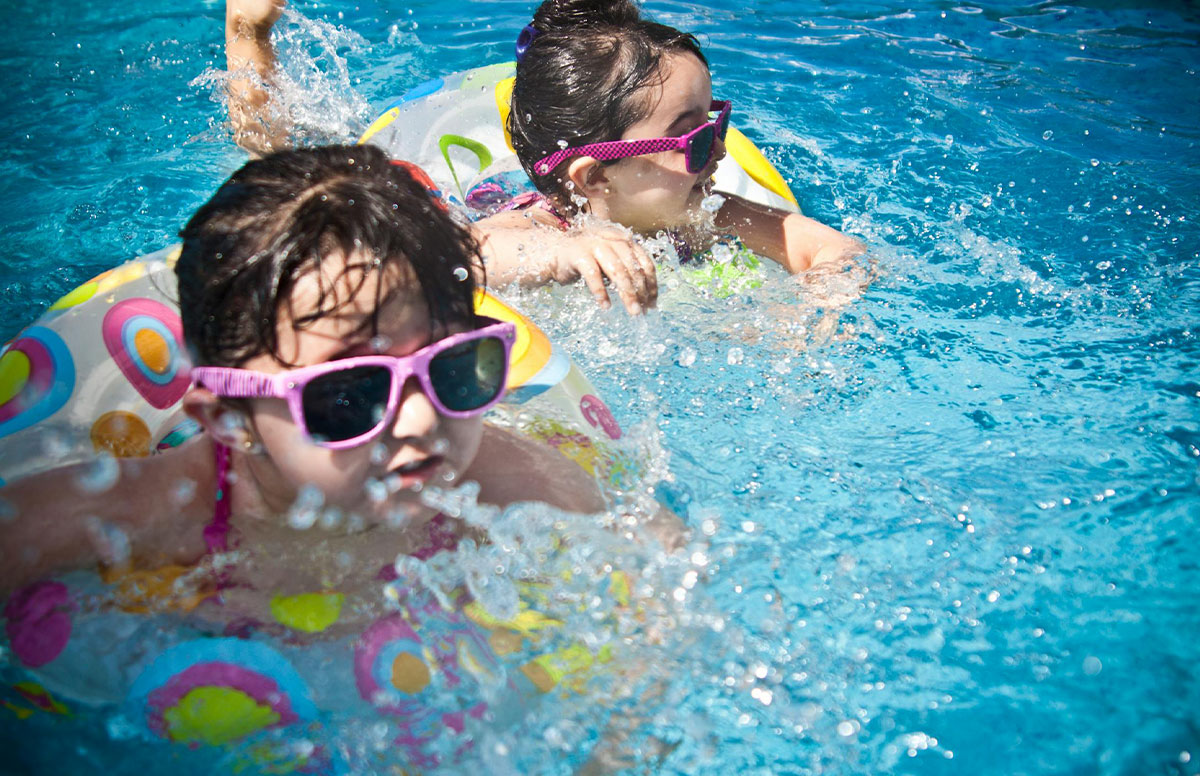
A day at the pool is a great way to spend time with your kids and cool off from the hot Texas weather.
Just remember, children can drown in less than a foot of water. Drowning is the leading cause of accidental deaths among children ages one to four and the second leading cause of death for children under the age of fourteen.1 Never turn your back while they are in the water. If you have a toddler, keep a hand on them at all times while in the pool or be within arm’s length. Do not rely on floatation devices (floaties, tubes, noodles, or rafts) to keep your child safe.
If you have a swimming pool at home:
- Your child should not be able to enter the pool area from the house.
- It should be surrounded by a fence at least four feet high.
- The gate should be self-closing and self-latching.
- Consider installing high latches or locks on doors that lead out to the pool area.
- Have an emergency plan.
- Learn CPR for children.
- Keep a phone by the pool.
- Teach children not to dive in shallow water.
- Caution children not to over breathe as a way to stay underwater longer. This could cause them to pass out.
- Teach older children to never swim alone. Always swim with a friend.
If you are considering swimming lessons, you can enroll as early as one year of age. In the past the AAP did not recommend swimming lessons for children under the age of 3. However, recent studies show Formal swimming lessons can reduce the risk of drowning by as much as 88% among young children aged 1 to 4 years, who are at greatest risk of drowning.2 The decision to enroll a child at this age should be based on the child’s development, physical abilities, and how often the child is around water.
Avoid infant programs that submerge your baby’s head for more than a few seconds. These programs should teach water fun not swimming. Babies can swallow enough water to cause seizures and brain damage.
As parents, we want to keep our children safe at all times. Don’t assume that because your child took swimming lessons that they are safe. Enjoy your summer and have fun!
For more information from the AAP:
http://www.healthychildren.org/English/safety-prevention/at-play/Pages/Swimming-Pool-Safety.aspx
- CDC. Web-based Injury Statistics Query and Reporting System (WISQARS). Atlanta, GA: US Department of Health and Human Services, CDC; 2009.
- Brenner RA, Taneja GS, Haynie DL, Trumble AC, Qian C, Klinger RM, Klevanoff MA. Association between swimming lessons and drowning in childhood: A case-control study. Archives of Pediatrics & Adolescent Medicine 2009;163(3):203-10.