Quick Links
 Quick Links
First of all, I think pigeons, though pretty foul fowl, don’t actually have toes and their feet point more or less straight ahead, not inward. The title of the blog might better be called:
Toeing In
Many infants toe in; their toes point inward toward each other. Fortunately, this us usually self limited and goes away by preschool age without any treatment.
Toeing in can be divided into three types. The most common is ‘internal tibial torsion’. This is what we call it if the tibia and fibula of the lower leg have a little inward twist so that the knee and ankle don’t line up with each other. This is usually a result of the position of the legs before birth in the mom’s womb when pointing toes inward helped fit into the cramped space available. The feet can sometimes point out from this too, but this is much less common (and must be very uncomfortable for the mother). Tibial torsion usually resolves after the child starts walking. The stress on the tibia with weight bearing and the forces exerted by the muscles of the leg gradually reshape the bone into the expected straight-on configuration. As recently as 25 years ago, it was common for children with tibial torsion to be fitted with corrective shoes, a Denis-Browne splint or ‘twister cables’ to force the feet into a straight or outward facing angle. Pediatricians stopped doing this this after it was shown that tibial torsion improved just as much with no treatment. (I apologize if I prescribed corrective shoes for you thirty years ago. We thought they helped.)
Toeing in can also be a result of the angulation of the foot itself (metatarsus adductus) so that the heel and toes form a curve. This is much less common and sometimes requires correction if it doesn’t resolve on its own soon after birth. We will be checking for this from the very first examinations.
And toeing in can happen if there is a twist in the femur, the bone of the upper leg: ‘femoral anteversion’. Usually when the hip is rotated fully out (like a ballet dancer standing with toes out) and fully in (toes in as far as is comfortable with straight knees), the half way point between these is just about straight ahead. If a child’s femur has a little twist (so called femoral anteversion for twisting in or retroversion for twisting out), the neutral and usually most comfortable position will not be straight ahead. This can cause toeing out (the ‘turn out’ one expects in the best dancers of classical ballet) or toeing in. This condition, too, usually straightens itself out with time unless it is severe. The anteversion (turning in) problem may solve itself with time, but it probably helps if ‘W sitting’ (sitting on one’s folded legs with the toes turned outward so that the legs form the shape of the letter W) is avoided.
So we shouldn’t worry too much about toeing in. If it doesn’t completely resolve on its own, it may be consoling to know that some of the world’s best distance runners have a slight toeing in (point of balance following a straight line when running) and in ballet a ‘good turn’ out is highly valued.
Whatever you do, just don’t call it pigeon toes.
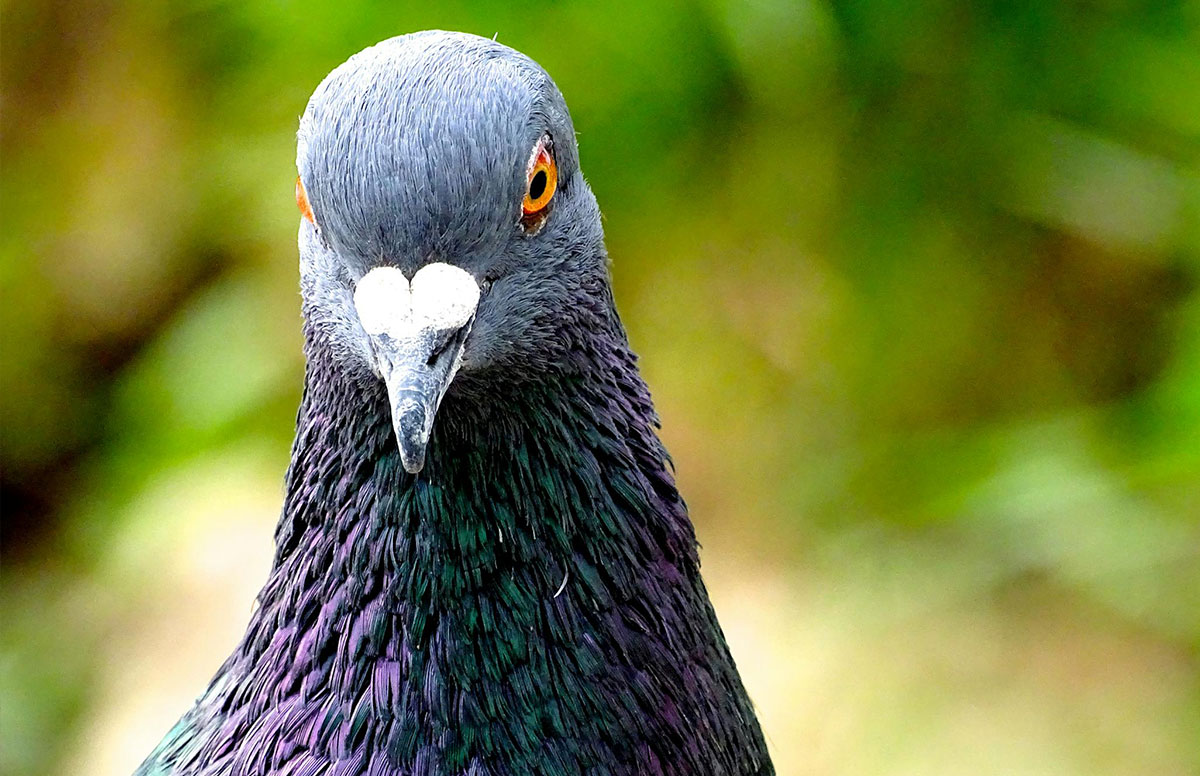
First of all, I think pigeons, though pretty foul fowl, don’t actually have toes and their feet point more or less straight ahead, not inward. The title of the blog might better be called:
Toeing In
Many infants toe in; their toes point inward toward each other. Fortunately, this us usually self limited and goes away by preschool age without any treatment.
Toeing in can be divided into three types. The most common is ‘internal tibial torsion’. This is what we call it if the tibia and fibula of the lower leg have a little inward twist so that the knee and ankle don’t line up with each other. This is usually a result of the position of the legs before birth in the mom’s womb when pointing toes inward helped fit into the cramped space available. The feet can sometimes point out from this too, but this is much less common (and must be very uncomfortable for the mother). Tibial torsion usually resolves after the child starts walking. The stress on the tibia with weight bearing and the forces exerted by the muscles of the leg gradually reshape the bone into the expected straight-on configuration. As recently as 25 years ago, it was common for children with tibial torsion to be fitted with corrective shoes, a Denis-Browne splint or ‘twister cables’ to force the feet into a straight or outward facing angle. Pediatricians stopped doing this this after it was shown that tibial torsion improved just as much with no treatment. (I apologize if I prescribed corrective shoes for you thirty years ago. We thought they helped.)
Toeing in can also be a result of the angulation of the foot itself (metatarsus adductus) so that the heel and toes form a curve. This is much less common and sometimes requires correction if it doesn’t resolve on its own soon after birth. We will be checking for this from the very first examinations.
And toeing in can happen if there is a twist in the femur, the bone of the upper leg: ‘femoral anteversion’. Usually when the hip is rotated fully out (like a ballet dancer standing with toes out) and fully in (toes in as far as is comfortable with straight knees), the half way point between these is just about straight ahead. If a child’s femur has a little twist (so called femoral anteversion for twisting in or retroversion for twisting out), the neutral and usually most comfortable position will not be straight ahead. This can cause toeing out (the ‘turn out’ one expects in the best dancers of classical ballet) or toeing in. This condition, too, usually straightens itself out with time unless it is severe. The anteversion (turning in) problem may solve itself with time, but it probably helps if ‘W sitting’ (sitting on one’s folded legs with the toes turned outward so that the legs form the shape of the letter W) is avoided.
So we shouldn’t worry too much about toeing in. If it doesn’t completely resolve on its own, it may be consoling to know that some of the world’s best distance runners have a slight toeing in (point of balance following a straight line when running) and in ballet a ‘good turn’ out is highly valued.
Whatever you do, just don’t call it pigeon toes.