Quick Links
 Quick Links
Not everybody might agree, but I think that it doesn’t matter exactly when you start solid foods: anywhere between 2 and 7 months age.
Now the most natural time, based on babies’ behavior, their watching adults eat and reaching for food, is about 4-5 months old, but studies indicated that starting at an earlier age, as early as two months, or waiting until a later age like 6-7 months, has no effect. It appears that starting cereal and vegetables and fruits early, middle or late, does not affect a child’s eventual weight, height, intelligence or tendency to have food allergies.
Having said that, I think that the easiest time to start is at age four to five months. Most babies are happy about this and quickly learn to open their mouths to the approaching spoon. By contrast, most babies two to three months old reflexively push solid foods out with their tongue.
It’s okay to wait later to start foods, too, though waiting past eight months may be associated with texture aversion, the dislike of the feel of food on the tongue.
What food first? It is interesting to note that almost all cultures start babies on a bland, light colored starchy food first. In many areas of the world, rice is the first food, in some, corn and in a few, potatoes or even turnips. This may be because these foods are the color of milk or because they are plentiful and cheap or because they are unlikely to cause an unpleasant reaction. For whatever reason, baby cereal is the most common first food. Most people then slowly progress through the repertoire of available baby foods, first yellow then green vegetables, then fruits and finally foods that contain meat. It is worth saying, however, that no matter how careful we are, a few babies will develop food allergies or intolerances and nothing we do seems to change that.
I do recall a four month checkup at which I suggested to a mother that it would be okay to start cereal. She replied ”Oh, I tried that and she didn’t like it.” I asked how she knew and she replied that the baby had pushed the cereal out with her tongue. I observed that this was probably just the extrusion reflex (a primitive reflex that all babies have at first) and that it would go away within the next few weeks. Perhaps she should just wait and try cereal again later. She said, “Oh, I don’t think that that’s it. She eats guacamole just fine.” My point here is that this baby was just fine. Truth be told, most children have some uncle or grandfather out there spooning in ice cream or pudding when parents aren’t looking and only rarely does this cause trouble.
So I recommend parents relax and enjoy this early stage of baby food exploration. Work toward teaching your child to appreciate a wide variety of foods in taste, temperature and texture. They may still have that three-year-old affinity for mac and cheese with chicken nuggets, but you will have done your best!
And don’t forget to set a good example!
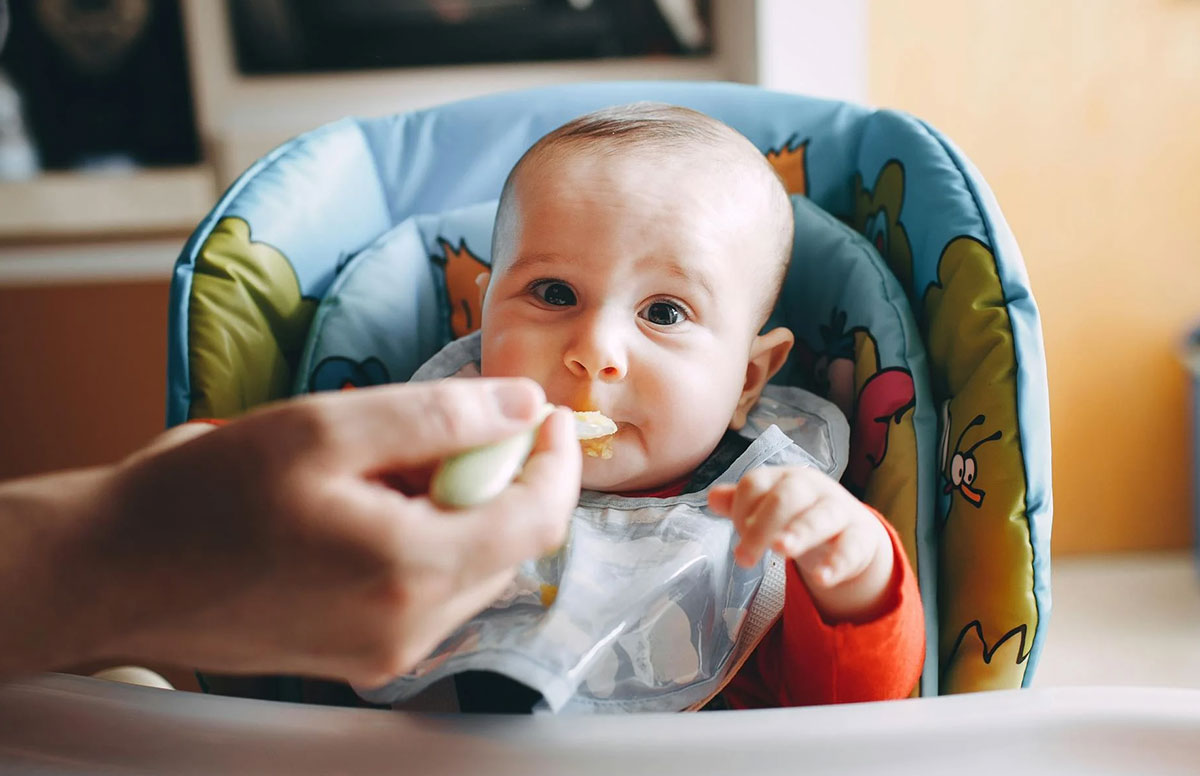
Not everybody might agree, but I think that it doesn’t matter exactly when you start solid foods: anywhere between 2 and 7 months age.
Now the most natural time, based on babies’ behavior, their watching adults eat and reaching for food, is about 4-5 months old, but studies indicated that starting at an earlier age, as early as two months, or waiting until a later age like 6-7 months, has no effect. It appears that starting cereal and vegetables and fruits early, middle or late, does not affect a child’s eventual weight, height, intelligence or tendency to have food allergies.
Having said that, I think that the easiest time to start is at age four to five months. Most babies are happy about this and quickly learn to open their mouths to the approaching spoon. By contrast, most babies two to three months old reflexively push solid foods out with their tongue.
It’s okay to wait later to start foods, too, though waiting past eight months may be associated with texture aversion, the dislike of the feel of food on the tongue.
What food first? It is interesting to note that almost all cultures start babies on a bland, light colored starchy food first. In many areas of the world, rice is the first food, in some, corn and in a few, potatoes or even turnips. This may be because these foods are the color of milk or because they are plentiful and cheap or because they are unlikely to cause an unpleasant reaction. For whatever reason, baby cereal is the most common first food. Most people then slowly progress through the repertoire of available baby foods, first yellow then green vegetables, then fruits and finally foods that contain meat. It is worth saying, however, that no matter how careful we are, a few babies will develop food allergies or intolerances and nothing we do seems to change that.
I do recall a four month checkup at which I suggested to a mother that it would be okay to start cereal. She replied ”Oh, I tried that and she didn’t like it.” I asked how she knew and she replied that the baby had pushed the cereal out with her tongue. I observed that this was probably just the extrusion reflex (a primitive reflex that all babies have at first) and that it would go away within the next few weeks. Perhaps she should just wait and try cereal again later. She said, “Oh, I don’t think that that’s it. She eats guacamole just fine.” My point here is that this baby was just fine. Truth be told, most children have some uncle or grandfather out there spooning in ice cream or pudding when parents aren’t looking and only rarely does this cause trouble.
So I recommend parents relax and enjoy this early stage of baby food exploration. Work toward teaching your child to appreciate a wide variety of foods in taste, temperature and texture. They may still have that three-year-old affinity for mac and cheese with chicken nuggets, but you will have done your best!
And don’t forget to set a good example!